
Chimney Repair
Crown rebuilds, damper work, firebox repairs and the structural fixes in between.
See chimney repairBrick, mortar and structure
Repointing, brick replacement, partial rebuilds and breathable waterproofing for chimneys worn down by winter.
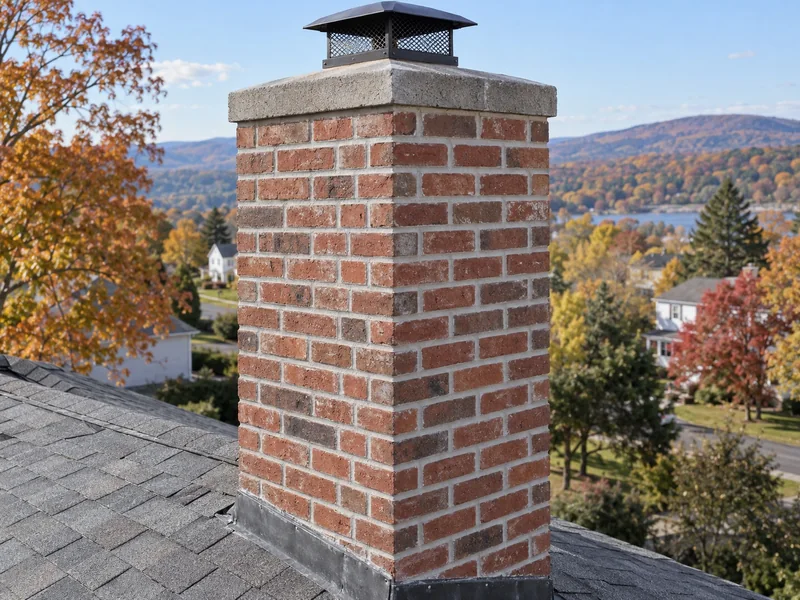
Masonry repair addresses the structure itself — the brick, block, stone and mortar that hold the chimney up. Around here, the thing taking chimneys apart is water combined with cold, and the repair work follows from how far that process has gone.
Brick and mortar are porous. They absorb water, and when that water freezes it expands roughly nine percent. A Hudson Valley winter runs through dozens of freeze-thaw cycles — days above freezing, nights below. Each one drives moisture deeper and forces material apart.
The chimney takes this worse than the rest of the house because it's exposed on all four sides, top to bottom, with nothing above it. Add the fact that the upper courses sit in constant wind-driven rain, and the top three feet is nearly always where failure starts.
Deteriorated mortar is ground out to a consistent depth and replaced with new mortar matched to the original in strength and color. Match matters more than people expect: modern high-portland mortar used on soft antique brick is harder than the brick itself, and it will destroy the brick faces over the following winters. On older homes we use a softer lime-based mix.
Individually spalled or cracked units are cut out and replaced. Sourcing a match on a hundred-year-old chimney is the hard part; sometimes brick salvaged from a less visible face of the same chimney is the best match available.
When the top courses are beyond repointing, the chimney is taken down to sound masonry and rebuilt from there, usually with a new crown and cap as part of the job. This is the most common substantial masonry repair we do.
Reserved for chimneys with structural failure below the roofline, severe leaning, or damage through the majority of the stack. It's a significant project and we'd rather tell you it's needed than take your money for a patch that won't hold.
After repairs, a vapor-permeable masonry water repellent sheds liquid water while letting the chimney dry outward. What you don't want is a film-forming sealer that traps moisture inside the brick — that accelerates the damage it was meant to prevent.
Repoint before rebuilding is the only option. Mortar joints are the cheapest thing on a chimney to maintain and the first thing to go. Catching soft joints while the brick is still sound is the difference between a day of repointing and a multi-day rebuild.
Masonry repair is rarely the only thing needed, because the water that wrecked the brick came in somewhere. A rebuild that doesn't address the crown or install a proper cap will need doing again. We quote them together so the fix is complete, and inspect the flue at the same time — tile damage is common in chimneys whose exterior has been failing for years.
Mortar needs consistent temperatures above about 40°F to cure properly, so masonry work runs roughly April through November here, with some flexibility at the edges. Calls that come in during January generally get scheduled for spring, with a temporary protective measure if the chimney is actively taking on water.
If the brick is sound and the mortar is soft, repointing is the answer. If brick faces are spalling on multiple sides or the stack is out of plumb, the top section usually needs rebuilding.
We match as closely as available materials allow, and show you options before starting. Exact matches on antique brick aren't always possible.
A breathable masonry repellent is worth applying after repairs on an exposed chimney. Avoid film-forming sealers, which trap moisture and make spalling worse.
Typically one to three days depending on height, access and weather, plus cure time before the chimney is used.
Sometimes, depending on height and roof pitch. Access requirements are part of the written quote rather than a surprise added later.
Crown rebuilds, damper work, firebox repairs and the structural fixes in between.
See chimney repairFinding the actual entry point — crown, flashing, brick face or cap — and sealing it.
See chimney leak repairCaps and spark screens that keep rain, snow, birds and embers where they belong.
See chimney cap installationWe are based in Warwick and also sweep chimneys in these nearby communities.
Call (845) 685-9770 or send a request with your address and what the chimney is doing.