
Pine Island, New York
Chimney Sweep in Pine Island, NY
Chimney sweeping for farmhouses and homes in Pine Island and across the black dirt. Our shop is in Warwick, a few miles east, and Pine Island is in our regular service area.
- CSIA certified
- Licensed & insured
- Open 7 days, 6am–9pm
When wood heat does the real work
In a house that leans on a wood stove for much of its heat, the chimney works every day from fall to spring. That is very different from a fireplace lit on a holiday. More fires mean more creosote, and a stove that is banked down at night makes it faster still.
For a hard-working flue, once a year is the minimum. Some heavy users need a mid-season check as well. During the visit we brush the flue, take the connector pipe apart if it needs it, and empty the cleanout at the base. We also look at the pipe joints and the clearances around the stove, since those are where problems tend to start.
- Full-length sweep of the stove flue or liner
- Connector pipe checked for creosote and corrosion
- Cleanout door and ash dump emptied
- Chimney top checked for wind damage
- Advice on burning habits if buildup is heavy
Wind and draft on open ground
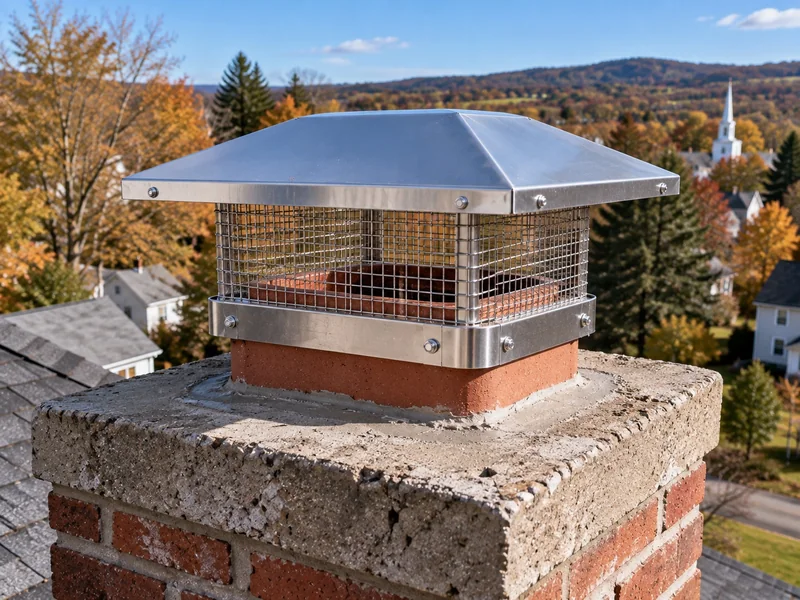
A chimney needs steady draft to pull smoke upward. On open, flat land the wind has nothing to slow it down. Strong gusts across the top of a flue can push smoke back down, and a short chimney suffers most. A cap designed to shed wind often cures it. If your fire puffs smoke on windy days, tell us when you call.
Smoke only on windy days? That points to the chimney top, not the fireplace. A wind-resistant cap or a taller flue is the usual answer.
About the hamlet
Chimneys in Pine Island, NY
Pine Island is a hamlet in the Town of Warwick and the largest community in the Black Dirt Region. The deep black soil was left behind by old glacial lakes, and farmers drained the land in stages through the 1800s and early 1900s. It is still onion country today. The town keeps an official profile of the Hamlet of Pine Island with more about the community.
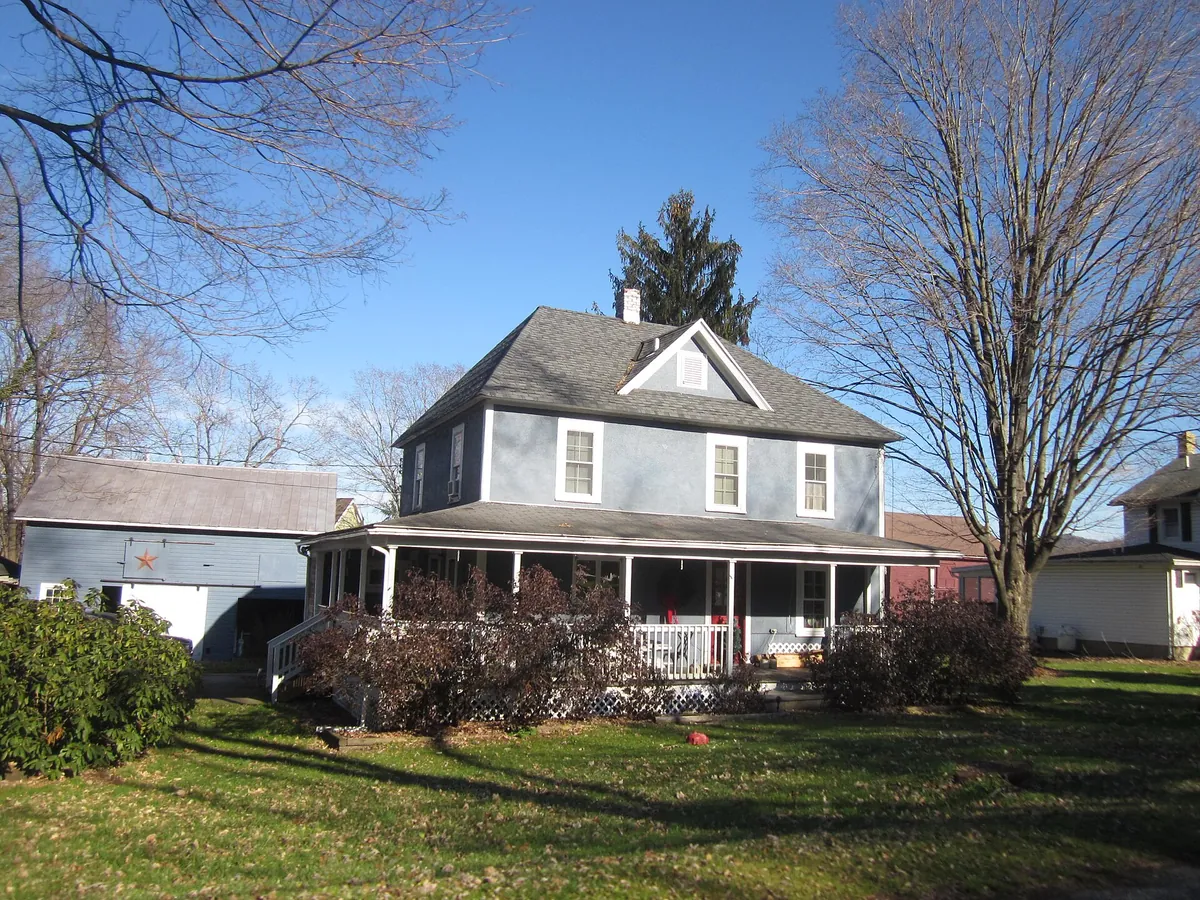
The landscape here shapes how chimneys age. The fields are flat and wide, so houses stand in the open with few trees or neighbours to shield them. A chimney on an exposed farmhouse takes the full force of wind, rain and snow from every direction. Crowns crack, caps loosen and mortar joints wear faster than they would in a sheltered village street.
Older farmhouses also tend to have more than one chimney, and some serve rooms that are no longer heated. A flue that is out of use should still be capped and checked, because an open one lets in water and animals.

Other chimney services around Pine Island
Exposed chimneys need more than brushing from time to time. Each of these has its own page.
- Chimney InspectionCamera inspections with written findings, $69 flat.
- Chimney RepairCrowns, flashing, dampers and smoke chambers.
- Chimney LinerStainless relining for cracked or missing flue tile.
- Chimney Cap InstallationKeeps rain, animals and downdrafts out.
- Masonry RepairRepointing and rebuilding weathered brick.
- Chimney Leak RepairFinding where the water gets in, then fixing it.
- Fireplace RepairFireboxes, dampers and smoking fireplaces.
Pine Island and the black dirt
The map is centred on the hamlet. It shows where we travel. We work out of Warwick and have no location in Pine Island.
Pine Island chimney sweep questions
Do you sweep chimneys on farm buildings as well as houses?
We sweep residential-style chimneys, fireplaces and stoves. If a shop or outbuilding has a wood stove with a normal flue, tell us about it when you call and we will say whether we can service it.
How do I tell if my stove pipe needs replacing?
Look for rust, pinholes, loose joints or white streaks at the seams. We check the pipe at every sweep and will show you anything that worries us.
Is a chimney cap really necessary?
On an exposed chimney, yes. It keeps rain and snow out of the flue, stops birds, and a wind-resistant style helps the draft.
Who does the work?
The company is owner-run. Joseph Ericson has been in the trade 47 years and still goes out on jobs.
Other service areas
Book a chimney sweep in Pine Island, NY
Reach us on (845) 685-9770, or send the form with a note about your stove and how much wood you burn.