Chimney Inspection
A documented look at the flue, firebox, crown and flashing so you know the real condition.
See chimney inspectionFireboxes, dampers and draft
Firebox repairs, damper replacement and a systematic fix for fireplaces that push smoke into the room.
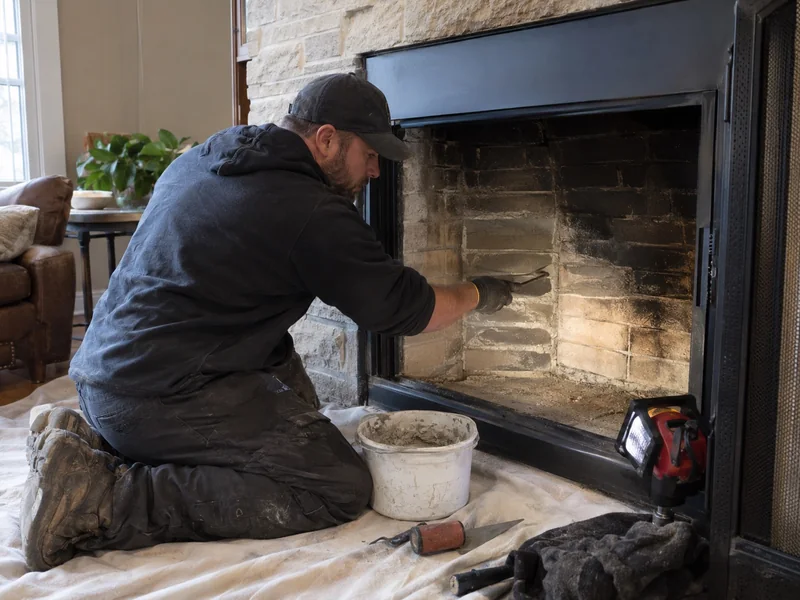
Fireplace repair covers the parts you actually interact with — the firebox, the damper, the hearth and the draft — plus the smoke chamber above them that determines whether a fire behaves. Most calls come from one of two complaints: it smokes, or something inside it is visibly broken.
A masonry firebox is firebrick laid with refractory mortar. Over years of heating and cooling, the joints open and the brick faces crack. Open joints are a real hazard, not a cosmetic issue — they let heat reach the common brick behind the firebrick and eventually the framing beyond it. Repairs range from repointing the joints with refractory mortar to replacing damaged firebrick to rebuilding the back and side walls entirely.
What to look for: mortar you can pick out with a screwdriver, gaps wider than about an eighth of an inch, cracked or missing firebrick, and any place you can see through the firebox wall.
Factory-built units are engineered systems, and they get repaired with manufacturer-specified parts. Cracked refractory panels are replaced, not patched — a cracked panel is a listed failure condition. Damaged doors, blowers, gaskets and screens are replaced with matching parts. When a panel or component is no longer manufactured and the unit is at the end of its service life, the honest answer is replacement, and we'll say so.
A throat damper that won't close is an open window in the roof all summer. One that won't open fully smokes the room. Rust and warping are the usual causes. We rebuild what can be rebuilt, replace what can't, and where the old assembly is beyond saving we generally recommend a top-sealing damper at the crown — better seal, and it caps the chimney at the same time.
Smoking is a system problem, and working through it in order is what solves it:
We work down that list rather than selling the last item first. There's more detail in our article on fireplaces that smoke into the room.
Smoke in the room means combustion gases in the room. That includes carbon monoxide. A fireplace that smokes intermittently shouldn't be used until the cause is identified, and every level of the house should have a working CO alarm regardless.
The hearth extension has to be deep and wide enough for the opening, and combustible materials — mantels, trim, flooring — need to keep their required clearances. This is a frequent finding on older homes where a mantel was replaced or flooring was run up to the hearth during a remodel. It's usually correctable without major work once someone points it out.
We work on gas fireplaces and gas inserts as well as wood-burning ones. Pilot assemblies and thermocouples that won't hold a flame, valves, glass and gasket replacement, logs sitting in the wrong position, and the venting side — liner condition, sizing, termination and blockages — are all part of what we do.
Gas units also have a maintenance need people miss: the flue still collects debris and the exhaust is wet, which is hard on older clay tile and on metal liners sized for a different appliance. An annual look at the venting matters even though a gas appliance leaves no creosote behind.
Fireplace symptoms and chimney causes overlap constantly. A smoking fireplace can be a firebox proportion problem or a cracked liner; a cold hearth smell can be a damper or a leak. A camera inspection keeps the repair aimed at the actual cause.
Usually it's a cold flue that needs priming, especially on an exterior chimney. If priming doesn't fix it, or the smoking continues once the fire is established, something else is going on.
In a prefabricated fireplace, no — cracked panels get replaced with the manufacturer's parts. In a masonry firebox, cracked firebrick and open joints can be repaired with refractory materials.
Not without an evaluation. Open joints let heat reach materials behind the firebox. Small gaps are repairable; the question is how far they go, which takes a look in person.
Usually creosote absorbing humidity, made worse by a damper that doesn't seal and by negative pressure pulling air down the flue. Sweeping helps, sealing the damper helps more, and a top-sealing damper usually ends it.
Yes. Gas fireplaces and inserts are part of what we do — pilot and thermocouple faults, valves, glass and gaskets, log placement, and the venting the appliance depends on.
A documented look at the flue, firebox, crown and flashing so you know the real condition.
See chimney inspectionCrown rebuilds, damper work, firebox repairs and the structural fixes in between.
See chimney repairWe are based in Warwick and also sweep chimneys in these nearby communities.
Call (845) 685-9770 or send a request with your address and what the chimney is doing.