The standard recommendation is an annual sweep and evaluation for any chimney in use. That's a floor, not a ceiling. How fast a flue loads up depends on three things: what you burn, how you burn it, and how the chimney is built.
By fuel and appliance
| Appliance | Typical frequency | What drives it |
|---|---|---|
| Open wood fireplace, occasional use | Once a year | Creosote and debris; annual check for animals and blockages |
| Wood stove or insert, primary heat | Once a year, with a mid-season check | Long burn cycles produce more creosote than open fires |
| Pellet stove | Once a year, plus regular owner cleaning | Fine ash packs the vent and the appliance's own passages |
| Gas fireplace or insert | Annual inspection | No creosote, but debris, corrosion and liner damage still occur |
| Oil-fired appliance venting into the chimney | Once a year | Soot accumulation and acidic condensate |
A common rule of thumb for wood burners is a sweep for every cord or so of wood burned. It's rough, but it captures the right idea: volume of wood is the main driver.
What makes creosote build faster
Wet or unseasoned wood
Green wood can be half water by weight. Boiling that water off consumes heat that should be going up the flue, so the smoke leaves cooler and condenses sooner. Wood split, stacked off the ground and covered on top for a full year — under 20% moisture on a cheap meter — is the single biggest lever you control.
Damped-down burns
Closing the air control to stretch a load overnight produces a smoldering, oxygen-starved fire. That's exactly the condition that makes tar. A hot, bright fire burning through a smaller load is cleaner than a big load choked down.
A cold or oversized flue
Exterior chimneys stay colder than interior ones, and a flue larger than the appliance needs lets exhaust slow and cool. Both push condensation. An insulated, correctly sized liner fixes the underlying problem where it exists.
The three stages of creosote
- Stage one — light, flaky soot. Brushes off easily.
- Stage two — hard, crunchy flakes that look like tar-coated cornflakes. Needs proper tooling.
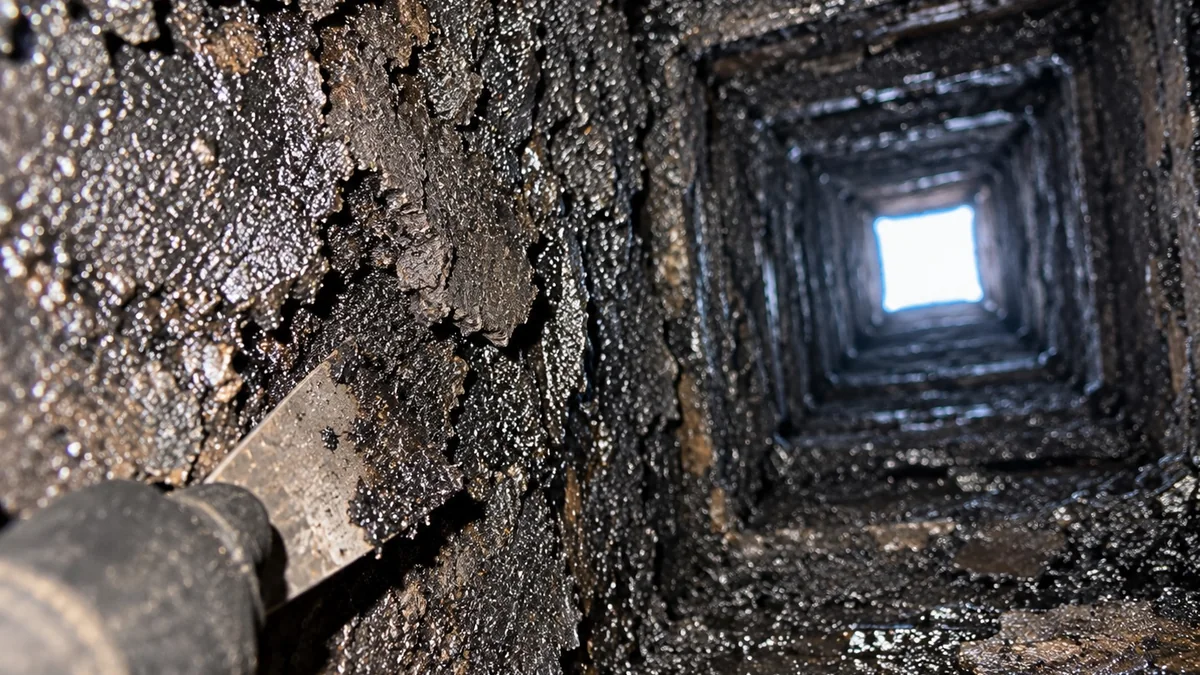
- Stage three — glazed, shiny tar. Difficult to remove, sometimes requiring chemical treatment over multiple visits, and it burns hot and fast if it ignites.
About an eighth of an inch of buildup is the usual threshold for sweeping. A quarter inch is enough to sustain a chimney fire.
Signs you shouldn't wait for the calendar
- Visible buildup on the damper or the first courses of flue tile
- A strong campfire smell in the room on humid or rainy days
- Fires that are hard to get going, or smoke that rolls out before the flue warms
- Black flakes on the roof, in the gutters or on the ground below the chimney
- You bought the house and don't know when it was last done
The best time of year to book
Spring and summer. Schedules are open, and if the sweep turns up a repair there's a full season to complete it before you need the fireplace. Book in October and you're competing with everyone else who just felt the first cold night — and if a liner or crown repair comes out of it, the wait for masonry-friendly weather may cost you part of the season.
Sweeping alone isn't the whole job
Brushing removes what's in the flue. It doesn't tell you whether the liner is cracked, the crown is splitting or the cap is gone. That's why a sweep should come with at least a visual evaluation, and why we run a camera when anything looks questionable. See chimney cleaning and chimney inspection for what each covers.
Quick answers
Can I skip a year if I barely used the fireplace?
Light use reduces creosote but not the other risks. Animals nest in unused flues, tiles crack, and caps blow off. An annual look is still worth it even when the sweep itself is quick.
Do chimney cleaning logs work?
Creosote-modifying logs can make some deposits easier to remove, but they don't remove anything from the flue and they can't inspect it. Treat them as an aid between sweeps, not a replacement.
How long does a sweep take?
About an hour for a typical fireplace. Heavy buildup or an insert that has to be pulled adds time.
Need someone to look at it? Chimney Sweep Warwick NY covers Warwick and the surrounding towns. Call (845) 685-9770 or send a service request.