
The first genuinely cold night here tends to arrive before anyone's ready, and it's the night everybody lights the first fire. Here's what to handle in the weeks before that, in the order it matters.
Schedule the sweep and inspection early
Book in late summer or early fall, not the week the forecast drops. Two reasons: availability, and repair season. If the visit turns up a cracked crown or a failed liner, masonry work needs temperatures above about 40°F to cure — a repair identified in November may wait until spring, and you lose the season. One identified in August gets done in August. See chimney cleaning and inspection.
Check the wood now, not in December
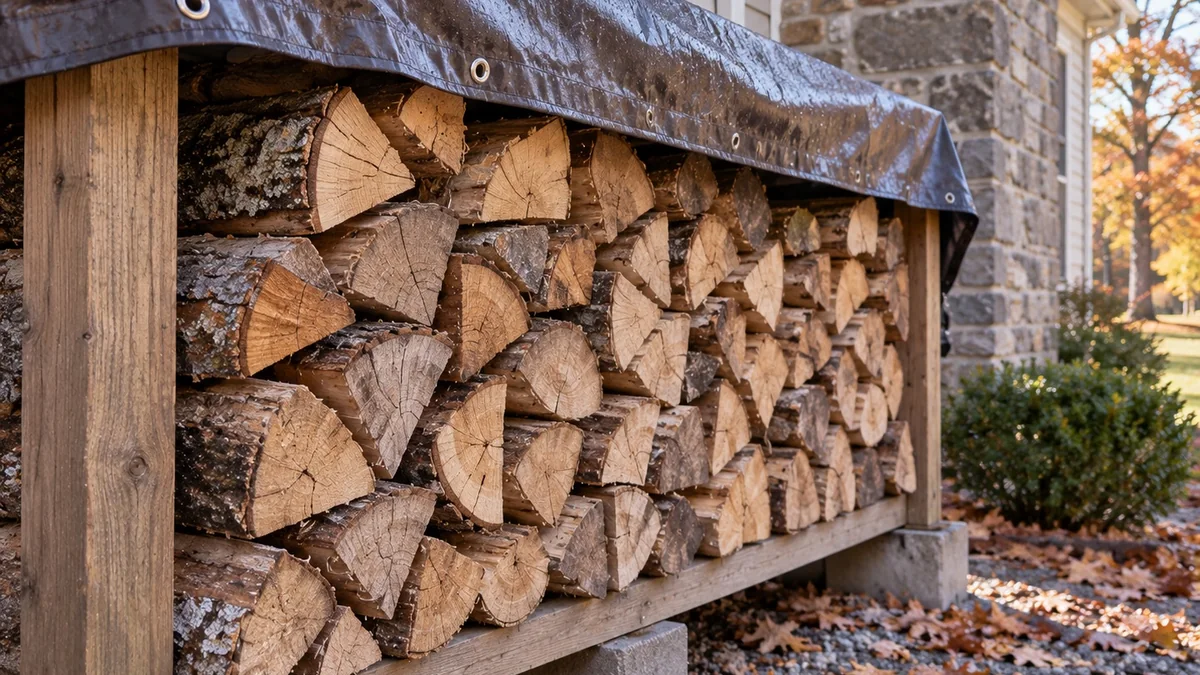
- Split, stacked off the ground, covered on top with the sides open
- Seasoned at least a year — two for oak
- Under 20% moisture on an inexpensive meter, checked on a freshly split face
- Hardwood for sustained heat; softwood only for kindling
- Stored away from the house — a wood pile against siding invites insects and rodents
Wet wood is the root of most creosote problems. If what you have is still heavy and green, buy a cord of properly seasoned wood for this winter and stack this year's for next.
Look at the outside of the chimney
From the ground, with binoculars if you have them:
- Is there a cap on every flue?
- Any visible cracks in the crown, or brick fragments on the roof and in gutters?
- White staining on the brick?
- Mortar joints visibly recessed or missing?
- Is the stack plumb, with no gap at the roofline?
Anything on that list is worth mentioning when you book. More detail in signs your chimney needs repair.
Test what's inside
- Open and close the damper — full travel, no binding, and a seal when closed
- Look for rust on the damper, which points to water getting in
- Check the firebox for open mortar joints or cracked firebrick
- Clear out old ash, leaving an inch or so as a bed if you burn wood
- On a gas unit, check that the pilot lights and the glass gasket is intact
Alarms and extinguisher
Working smoke alarms and carbon monoxide alarms on every level, tested, with fresh batteries. CO alarms have a service life of their own — check the date on the back and replace units past it. A fire extinguisher rated for the house, stored where you can reach it without crossing the fireplace.
Clearances and the hearth area
Look at what's near the fireplace now that furniture has moved since last winter: rugs, baskets, firewood racks, holiday decorations that'll appear in December. Keep combustibles at the clearance the appliance requires, and keep the hearth extension clear.
How to run the first fire
- Open the damper fully.
- Prime the flue — a rolled newspaper torch held up near the damper for a minute reverses a cold column of air.
- Build it top-down: larger splits on the bottom, smaller above, kindling on top.
- Give it plenty of air at the start; a hot, fast establishment burns cleaner than a slow smolder.
- Watch the first few minutes. If smoke rolls into the room after priming, put it out and get it looked at.
Through the season
- Burn hot, bright fires instead of damped-down overnight loads
- Check the cap and screen after major storms
- Watch for buildup on the damper as a rough indicator of how fast the flue is loading
- Ash disposal: metal container with a lid, on a non-combustible surface, away from the house — coals stay live for days
One appointment covers most of this. A sweep with an evaluation handles the flue, the damper, the firebox and the top of the chimney in a single visit. Booking it in summer is the difference between fixing a problem and waiting out a winter with it.
Quick answers
When should I book my chimney sweep?
Late spring through early fall. Schedules are open and any repair found can still be completed before the weather turns.
How do I know if my firewood is dry enough?
Split a piece and check the fresh face with a moisture meter — under 20% is the target. Dry wood is lighter, has checked ends, and knocks hollow.
Should I close the damper when the fireplace isn't in use?
Yes, once the fire is fully out and cold. An open damper vents heated air year-round. If yours doesn't seal, a top-sealing damper cap solves both that and water entry.
Need someone to look at it? Chimney Sweep Warwick NY covers Warwick and the surrounding towns. Call (845) 685-9770 or send a service request.