Chimneys fail slowly and visibly, if you know what you're looking at. Most of the signs below are visible from the ground or the firebox, and most of them are cheaper to address early. Here's what each one usually means.
1. White staining on the brick
Efflorescence is a chalky white deposit left when water moves through masonry and evaporates, carrying salts to the surface. The stain itself is harmless. What it tells you is that water is inside the chimney — and in a climate that freezes, water inside masonry is what breaks it apart. Find the entry point before the freeze-thaw season does more work.
2. Brick faces flaking or popping off
Spalling means water has been absorbed, frozen and expanded inside the brick. Once faces start shedding, the exposed material absorbs even faster. Isolated units can be replaced; widespread spalling on the upper courses usually means a partial rebuild.
3. Mortar joints you can scrape out
Take a key to a joint. If mortar crumbles away easily, the joints have failed and the chimney is taking on water at every course. Repointing now is a fraction of the cost of a rebuild later.
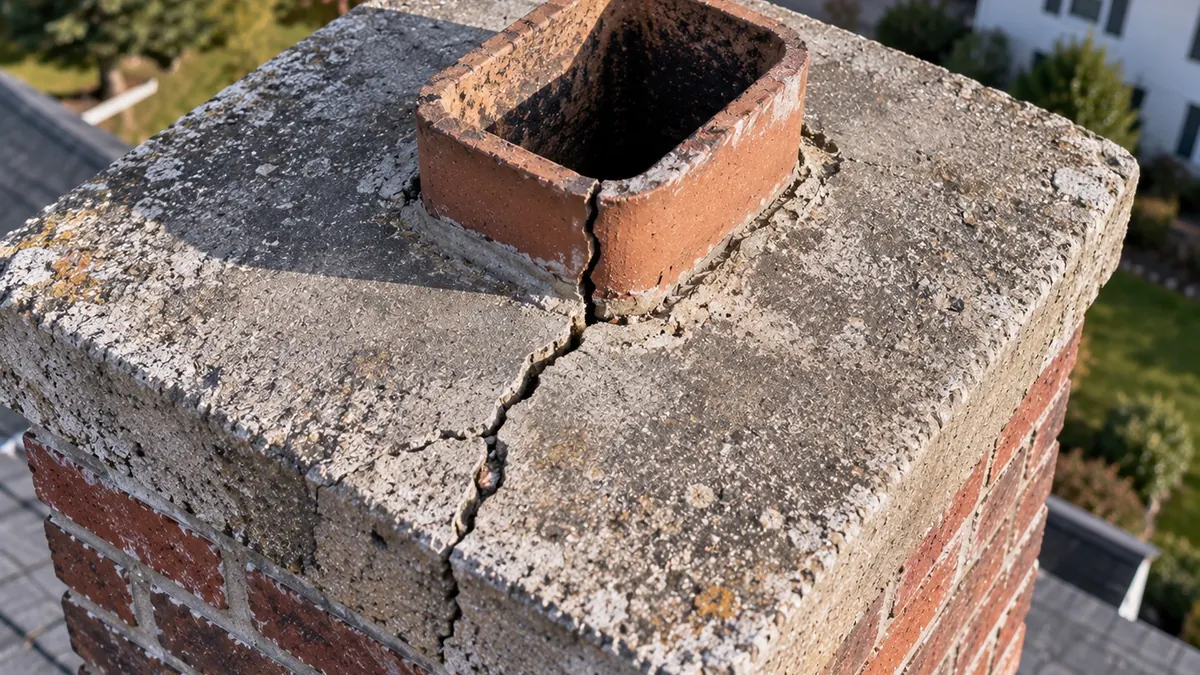
4. A cracked or crumbling crown
The crown is the concrete slab at the top. Cracks let water into the top of the masonry and around the flue tile. It's the most common defect we find and among the cheapest to fix while the cracks are still narrow.
5. Rust on the damper or firebox
Metal inside a chimney shouldn't be getting wet. Rust means water is reaching the firebox — usually an open flue, a cracked crown, or failed flashing. A damper that binds or won't seal is often the first symptom anyone notices.
6. Ceiling or wall stains near the chimney
Water entering at the crown or flashing runs down the outside of the flue and shows up where framing meets drywall, often several feet from the chimney itself. Fresh stains after heavy rain point to flashing; steady dampness points to something more continuous.
7. Pieces of tile on the smoke shelf
Shards of clay collecting above the damper mean flue tiles are deteriorating — often after a chimney fire, sometimes from age and moisture. A cracked liner lets heat and gases reach the structure. This one is a stop-using-it-until-inspected item. See cracked liners: repair or replace.
8. A stack that's leaning or has gaps at the roofline
Visible lean, stepped cracks through the joints, or a gap opening between chimney and house indicate movement — footing settlement or structural failure. This needs evaluation promptly, not at next year's sweep.
9. Smoke coming into the room
Draft problems can be simple (cold flue, closed damper) or structural (blockage, cracked liner, wrong flue size). If a fireplace that used to draw well starts smoking, something changed — and finding out what is the point of an inspection. Details in why fireplaces smoke.
How urgent is each one?
| Sign | Urgency |
|---|---|
| Tile fragments on the smoke shelf, smoke entering the room, visible lean | Stop using the appliance and get it inspected |
| Cracked crown, rusted damper, ceiling stains, spalling brick | Address this season — it worsens over winter |
| Efflorescence, early mortar erosion | Plan it; monitor at the annual sweep |
What to do with what you found
Photograph it, note when it appears (after rain? while burning?), and get a camera inspection. The visible symptom and the actual cause are often in different places, and the point of the inspection is to connect them before anyone quotes a repair.
Quick answers
Can I use the fireplace while waiting for a repair?
It depends entirely on what's wrong. Cosmetic masonry damage on the exterior usually doesn't stop you; a cracked liner or a blocked flue does. Ask directly, and expect a direct answer.
How much does chimney repair cost?
Crown sealing and cap installation are small jobs. Repointing, crown recasting and relining are larger. Rebuilds are the big one. Any honest quote follows an inspection.
Need someone to look at it? Chimney Sweep Warwick NY covers Warwick and the surrounding towns. Call (845) 685-9770 or send a service request.