Chimney Inspection
A documented look at the flue, firebox, crown and flashing so you know the real condition.
About chimney inspectionServing Warwick and the surrounding Orange County towns
Sweeping, inspection and repair for wood, gas and pellet-burning fireplaces and stoves — done carefully, explained plainly, and documented with photos you get to keep.
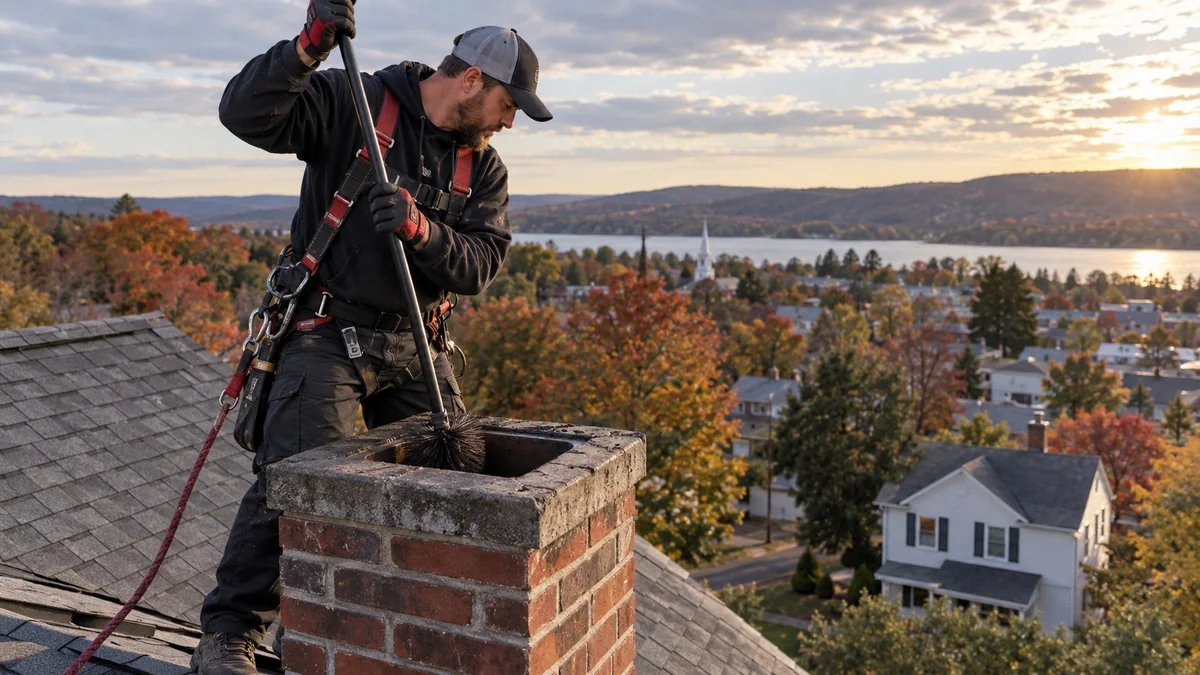
Tell us what the chimney is doing. We'll tell you what it needs.
(845) 685-97707 1st St, Warwick, NY 10990
Open 7 days a week, 6:00 AM – 9:00 PM
Licensed & insured · 47 years in business · $69 inspections
Local chimney company
Most of the chimneys around here sit on houses built for wood heat — Victorians in the village, farmhouses out toward Pine Island, newer construction with prefabricated fireplaces up on the ridges. They age differently, but they fail the same way: a cap goes missing, water gets into the crown, the crown cracks, the liner takes on moisture, and a flue that drafted fine for twenty years starts pushing smoke back into the room.
We sweep chimneys, inspect them properly, and fix what the inspection turns up. One company for the annual maintenance and for the masonry and liner work that follows from it, so nobody has to referee between a sweep and a mason.
If you burn wood, an annual sweep is the cheapest safety work you'll do all year. If you've just bought a house with a fireplace nobody has touched in a decade, start with an inspection before you light anything.
Licensed and insured, 47 years in business, and owned and run by Joseph Ericson. Inspections are $69, and every repair quote comes in writing after we've actually seen the chimney.
What we do
Eight services that cover the full life of a chimney, from the yearly sweep to a rebuild of the top three feet of brick.
A documented look at the flue, firebox, crown and flashing so you know the real condition.
About chimney inspectionCrown rebuilds, damper work, firebox repairs and the structural fixes in between.
About chimney repairStainless liner installation and relining when clay tiles crack or an appliance changes.
About chimney linerCaps and spark screens that keep rain, snow, birds and embers where they belong.
About chimney cap installationRepointing, brick replacement and rebuilds for chimneys worn down by freeze-thaw.
About masonry repairFinding the actual entry point — crown, flashing, brick face or cap — and sealing it.
About chimney leak repairFirebox, refractory panel, damper and draft problems that keep a fireplace unusable.
About fireplace repairProblems we get called for
Usually a draft problem: a blocked flue, a closed or broken damper, a cold flue that needs priming, or a house so tight the fire can't pull air. We work through it in order instead of guessing.
Water rarely enters where the stain appears. The real source is the crown, the flashing, an uncapped flue or a porous brick face — four different repairs, so the diagnosis matters.
Freeze-thaw cycling pulls water into brick, freezes it, and pops the face off. Once the mortar joints are soft, the top of the stack is on borrowed time.
Real-estate inspections often note a cracked liner or a missing cap without detail. We inspect with a camera and give you documentation the other side can read.
Chimney sweeping
Chimney cleaning removes creosote, soot and debris from the flue so the chimney can vent the way it was built to. It's the maintenance item that keeps everything else honest: a clean flue drafts better, burns cooler, and lets an inspector actually see the liner behind the buildup.
Wood smoke carries unburned gases, tar droplets and water vapor. When that mixture hits flue walls cooler than about 250°F, it condenses and sticks. The residue starts as a light, flaky soot, hardens into a crusty layer, and eventually becomes the shiny tar-like glaze that's difficult to remove and burns hot when it ignites.
Three things speed it up: unseasoned wood, restricted air (long damped-down burns), and a flue that's oversized or runs up a cold exterior wall. Chimneys on the outside of a house — common on older homes here — stay colder and load up faster than an interior stack.
The flue is brushed from the appliance end, the roof, or both, depending on the chimney. Rotary systems with flexible rods handle offsets and heavy glaze; traditional poly or wire brushes handle standard clay tile and stainless liners. Which one we use depends on what your liner can tolerate — wire on stainless is a good way to destroy a liner, so the tooling is matched to the material.
A sweep visit includes:
Wood appliances produce the most creosote and get the most attention. Pellet stoves make finer, lighter ash that packs into the vent and the appliance itself, so their venting and exhaust path both need service. Gas appliances leave no creosote but their flues still collect debris and corrode — moisture in gas exhaust is hard on older clay tile and on metal liners that were sized for a different appliance.
Sweeping is not the same as inspecting. Brushing the flue removes what's in it; it doesn't tell you whether the liner is cracked or the crown is failing. That's why we pair cleaning with a look at the rest of the system, and recommend a full camera inspection when anything looks off.
Late spring through early fall is the easy window — schedules are open and any repair the sweep turns up can be finished before the weather turns. The rush starts with the first cold week of autumn, and if a liner or masonry repair comes out of that visit, you may be waiting while temperatures are already dropping. Booking the sweep for an off-season month is the single easiest way to avoid burning through a season with a chimney you can't use.
Roughly an eighth of an inch of buildup is the point at which sweeping is recommended, and a quarter inch is enough to support a chimney fire. Glazed creosote should be removed at any thickness — it burns hot and is hard to get off once it's thick.
Whichever gives the better result for that chimney. Many jobs are done from inside with containment and a rotary system; steep or tall stacks, and chimneys with poor interior access, get worked from the top.
Yes. Inserts often have to be pulled to reach the connector and the flue behind them. Say so when you book, since it adds time to the appointment.
Right away, assuming nothing is found that makes the system unsafe. If something is, we'll tell you before we leave rather than in an email later.
It doesn't build creosote, but the flue still needs an annual look for debris, nesting material, corrosion and liner damage. Gas exhaust is wet and it's hard on older liners.
Chimney safety
Chimney fires start with creosote — the tar that condenses out of wood smoke when it hits a cool flue. It builds up faster when wood is wet, when the fire is damped down for long overnight burns, and when the flue is oversized for the appliance. Sweeping removes it. Burning properly keeps it from coming back quickly.
Carbon monoxide is the quieter risk. A blocked flue, a cracked liner, or a chimney shared with a furnace can push combustion gases back into the house. A camera inspection finds those defects; a CO alarm on every floor is the backstop.
Local work
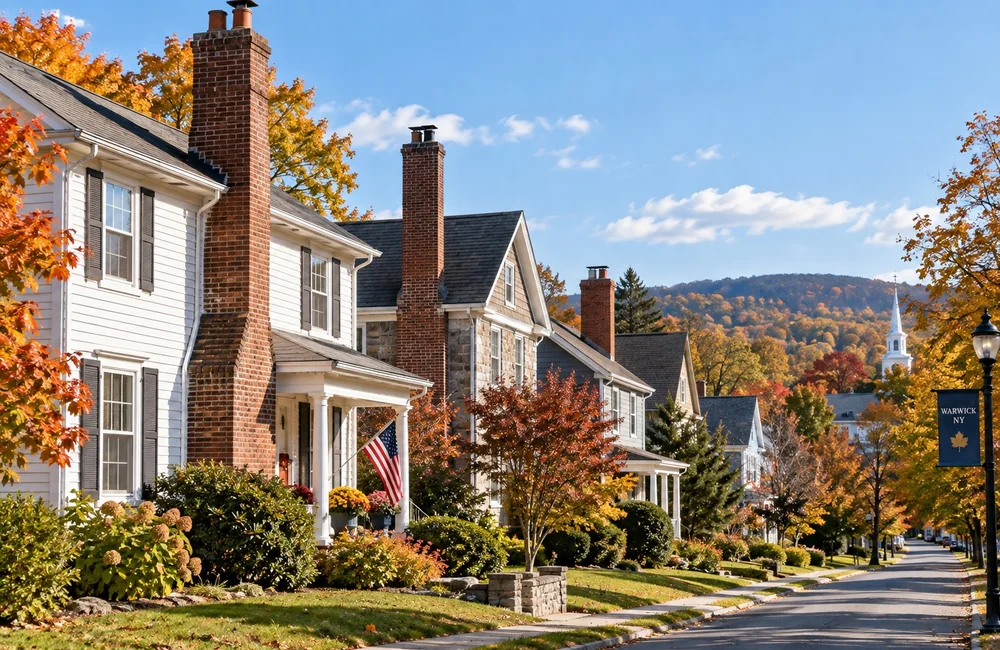
Winters here run through dozens of freeze-thaw cycles, and that is what takes chimneys apart. Water soaks into brick and crown during a January thaw, freezes overnight, and expands. Do that forty times a winter and mortar joints open, crown cracks widen, and brick faces spall off.
The housing stock matters too. Older village homes often have unlined or clay-tile flues built for coal or open fires, and those flues are frequently the wrong size for the wood stove insert someone added later. Homes out in the farmland deal with more wind-driven rain on exposed stacks, and a missing or undersized cap shows up fast.
We factor all of that into what we look for. A twelve-year-old chimney on a ridge in Bellvale and a hundred-year-old stack in the village need attention in different places.
Chimney sweep pages for nearby towns: Florida, Greenwood Lake, Chester, Pine Island, Sugar Loaf, Goshen, Bellvale.
How it goes
Tell us the appliance, the symptom and the town. We'll say what the visit involves and roughly how long it takes.
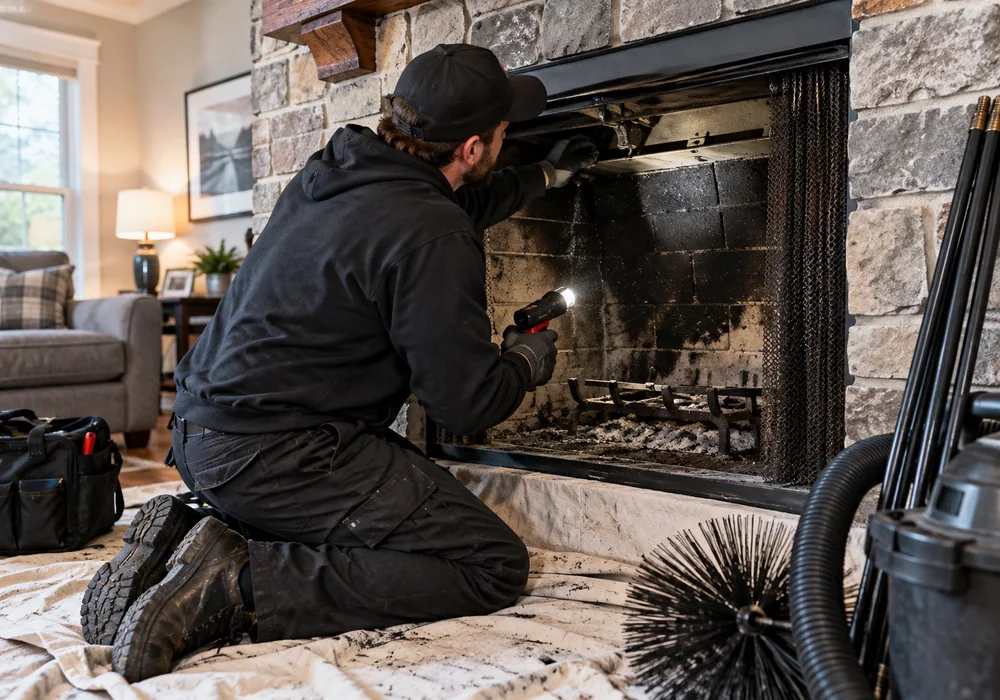
Drop cloths, a sealed fireplace opening and a HEPA vacuum go in before any brush goes up the flue.
The flue gets swept, then looked at with a camera — plus the crown, cap, flashing and firebox.
Photos, plain-language explanation, and a written quote if something needs repair. No pressure to decide on the spot.
Why homeowners call us back
Photos and notes from every inspection, so you can see what we saw rather than take our word for it.
Containment and vacuum on every sweep. The fireplace should look better when we leave than when we arrived.
Based in Warwick, working the surrounding towns. Follow-up visits don't require a two-county drive.
6:00 AM to 9:00 PM, weekends included, with emergency calls taken and the most urgent job worked first.
Straight dealing
Nobody can see up their own chimney, which makes it easy for a contractor to describe a problem that isn't there. Four things keep that from being a question you have to take on faith.
It's the visit that answers the question. You get the camera stills, a written summary of what each component is doing, and a straight answer on whether the chimney is safe to use as it stands.
If repair work comes out of it, that quote is separate and itemized. No obligation to have us do it.
CSIA certified · licensed & insured · 47 years
More detail on the full FAQ page.
For a fireplace or wood stove burning regularly through the season, once a year is the standard. Burn more than three cords of wood a winter, or burn wood that isn't fully seasoned, and a mid-season check is worth it. Gas appliances still need the flue looked at annually even though they leave no soot.
Yes, and those are the ones that most often turn up surprises: nesting material, a deteriorated smoke chamber, a missing cap, tiles that shifted. We sweep what's there, then inspect before you light the first fire.
It shouldn't. The work area gets covered, the fireplace opening gets sealed, and a HEPA vacuum runs the whole time the brush is in the flue. The soot stays in the vacuum instead of on the hearth rug.
Sometimes. Describe what you're seeing — smoke rolling into the room, a stain on the ceiling near the chimney chase, brick flaking onto the roof — and we can usually narrow it down over the phone. What we won't do is quote a repair sight unseen.
Yes. Inserts and gas appliances both vent through a flue, and both need that flue sized and lined correctly for the appliance. Tell us the make and model when you call if you have it.
Warwick village and town first, then nearby Orange County communities including Florida, Pine Island, Greenwood Lake, Bellvale, Sugar Loaf and Chester. The service area page lists the full coverage.
Sweeping, inspection and repair across Warwick and the surrounding towns. Call (845) 685-9770 or send a request and we'll get back to you.