Chimney Cap Installation
Caps and spark screens that keep rain, snow, birds and embers where they belong.
See chimney cap installationFind the source, then fix it
Water stains near a chimney have five likely sources and five different repairs. Diagnosis comes first.
Chimney leaks are diagnostic work before they're repair work. Water rarely enters where the stain shows up — it travels along framing, runs down the outside of the flue, and appears in a ceiling several feet away. Fixing the wrong component is the usual reason a "repaired" leak comes back.
The most direct route: straight down the open flue onto the smoke shelf. Signs include a damp smell, a rusted damper, and water dripping into the firebox during rain.
The crown should shed water away from the flue tile and past the brick. Cracks let water into the top of the masonry, where freeze-thaw widens them every winter. Crown cracking is the most common defect we find, and early sealing is inexpensive compared to what follows.
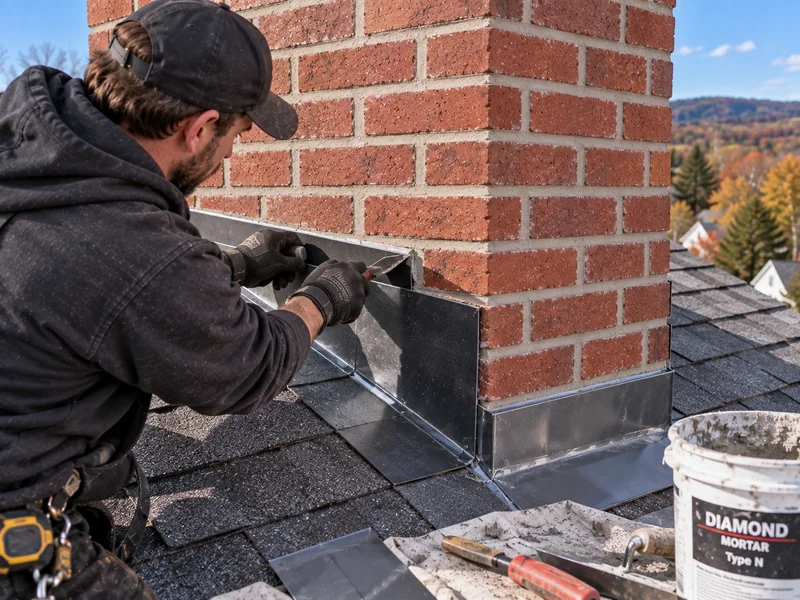
Flashing seals the joint between chimney and roof, and it's a two-part system: step flashing woven into the shingles and counter-flashing set into the mortar joints. Roofing tar smeared over the joint is a temporary measure that fails within a few seasons and is the single most common bad repair we find. Stains on the ceiling near the chimney chase usually point here.
Brick absorbs wind-driven rain. When the mortar joints have opened, a driving storm from the west can soak the stack. The symptoms are white efflorescence on the exterior and damp patches on interior walls after heavy weather, without any obvious drip.
Not technically a leak, but it looks like one. A flue that's oversized or uninsulated lets exhaust cool and condense on the liner, and with gas appliances that condensate is acidic. The tell is moisture that appears while the appliance runs rather than when it rains.
The sequence matters. Water-testing everything at once tells you nothing; testing one component at a time gives you an answer.
| Source | Repair |
|---|---|
| Open flue | Properly sized cap installation |
| Cracked crown | Flexible crown coating, or cutting off and recasting the crown |
| Failed flashing | New step and counter-flashing, counter-flashing set into cut mortar joints |
| Porous brick, open joints | Repointing and breathable water repellent |
| Condensation | Correctly sized, insulated liner |
What we don't do: seal a leak by coating the whole chimney in a film-forming product. It traps moisture inside the masonry, and the following winter the freeze-thaw damage is worse than what you started with.
Water in a chimney doesn't stay a cosmetic problem. It rusts dampers and metal components, breaks down mortar between flue tiles, rots framing and sheathing in the chase, stains and deteriorates plaster, and in an unused flue it can create conditions for mold. The repair almost always gets more expensive the longer it waits, because the water keeps working all winter.
High wind lifts caps and flashing, and heavy limbs damage crowns. If water appears after a storm that didn't appear before it, the entry point is usually new and visible from the roof. Document what you see from the ground, take a photo of the ceiling staining, and call — that's often enough for us to know what to bring.
That pattern usually points to wind-driven rain being absorbed by the brick face or getting past flashing at an angle. Steady drips in ordinary rain more often mean an open flue or a cracked crown.
Often yes. Water entering at the crown or flashing runs down outside the flue and shows up where the framing meets drywall, several feet from where it got in.
We handle chimney flashing as part of leak repair. If the roof itself is failing around it, we'll tell you that honestly — you'd be wasting money flashing into shingles at the end of their life.
Only if absorption through the brick is the actual source. Applied over a cracked crown or failed flashing, it changes nothing.
It depends entirely on the source — a cap is a small job, a crown recast is a bigger one, a rebuild is bigger still. We diagnose first — a $69 inspection — then quote the repair in writing.
Caps and spark screens that keep rain, snow, birds and embers where they belong.
See chimney cap installationRepointing, brick replacement and rebuilds for chimneys worn down by freeze-thaw.
See masonry repairCrown rebuilds, damper work, firebox repairs and the structural fixes in between.
See chimney repairWe are based in Warwick and also sweep chimneys in these nearby communities.
Call (845) 685-9770 or send a request with your address and what the chimney is doing.