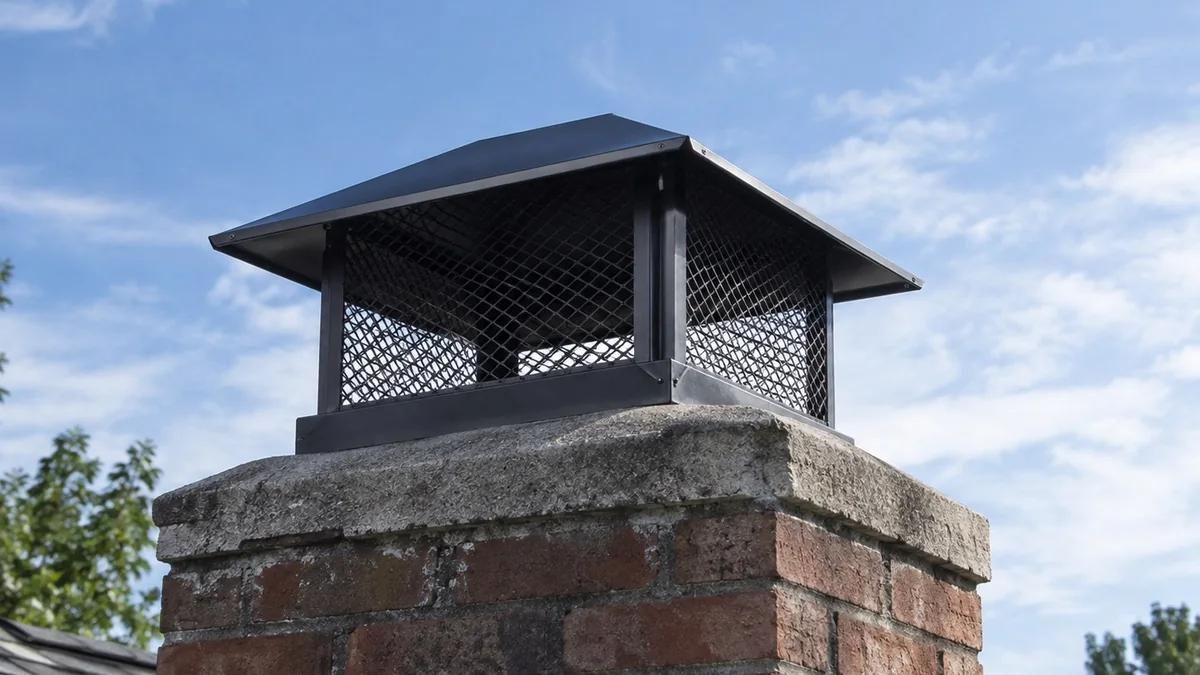
A cap costs less than almost anything else on a chimney and prevents several of the most expensive failures. An uncapped flue is, functionally, a drain aimed into your house.
What an open flue takes in
Rain and snow
A standard flue opening collects a meaningful volume of water over a wet season. It lands on the smoke shelf, rusts the damper, soaks masonry from the inside and degrades the mortar joints between flue tiles. In winter that water freezes inside the tile joints and works them apart.
Animals
Warm flues attract birds, squirrels and raccoons. Nesting material blocks the flue — and a blocked flue on an active appliance pushes exhaust, including carbon monoxide, back into the house. Removal is also more expensive than the cap that would have prevented it.
Debris
Leaves and twigs collect in an open flue, especially under trees. Same result: restricted draft, and a fire hazard when they're sitting on top of creosote.
Downdrafts
Wind crossing an open flue can push smoke and odor back down into the room. A cap with a lid breaks that pattern, and wind-directional caps help in exposed locations.
Escaping embers
A screened cap catches burning material before it lands on the roof or in dry leaves. On a wood-burning chimney the spark screen isn't optional in any practical sense.
Choosing a cap
| Type | Best for | Notes |
|---|---|---|
| Single-flue | One flue tile | Mounts to the tile; the standard choice |
| Multi-flue | Two or more flues | Also covers and protects the crown itself |
| Top-sealing damper cap | Failed throat dampers | Gasketed seal at the top; caps and dampers in one |
| Wind-directional | Chronic downdraft | A fix for a specific problem, not a general upgrade |
On material: galvanized rusts out in a few winters and stains the brick on the way. Stainless is the practical standard. Copper costs more and lasts decades — worth it where the look matters.
Caps that cause problems
- Too small. An undersized cap restricts flow and hurts draft.
- Poorly fastened. Loose caps rattle, shift and end up in the yard.
- Clogged screens. Mesh loads with creosote on heavily used wood chimneys and needs checking each season.
- Wrong mesh for the appliance. Some high-moisture exhaust ices or clogs fine mesh.
A cap is half the protection
The cap protects the flue opening. The crown protects the masonry around it. Putting a new cap on a cracked crown leaves water entering through the crown, which is where most chimney water damage starts anyway. When both need attention, do both — see crown repair and leak repair.
Don't cap a flue with a nest in it. Clear the flue first. And note that chimney swifts are federally protected while nesting — if they're present, the work waits until they've fledged.
What installation involves
Measuring the flue tile, fitting the cap to that dimension, and fastening it so weather can't move it. Single-flue stainless caps are typically a quick roof visit. Multi-flue caps are fabricated to the crown dimensions, so they take a measuring visit first. Either way, the installation is one of the shortest jobs on the list — and one of the highest-value.
Quick answers
How do I tell if my chimney has a cap?
Look up from the ground: you should see a lid over the flue tiles, not open clay. If you can't tell, any sweep at roof level can send you a photo.
How long do chimney caps last?
Stainless caps last many years with occasional screen cleaning. Galvanized caps often rust through within a few seasons in this climate.
Can a cap stop downdrafts completely?
It helps, and wind-directional designs help more. Persistent downdraft can also come from flue height or nearby terrain, which a cap alone won't solve.
Need someone to look at it? Chimney Sweep Warwick NY covers Warwick and the surrounding towns. Call (845) 685-9770 or send a service request.