Chimney Repair
Crown rebuilds, damper work, firebox repairs and the structural fixes in between.
See chimney repairRelining and liner replacement
Stainless relining sized to your appliance, for cracked clay tile, unlined flues and new stove or insert installations.
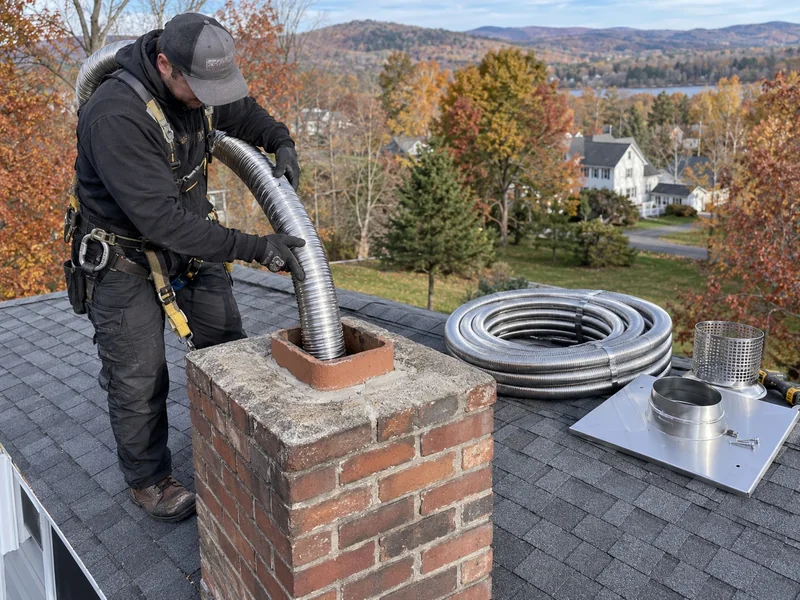
The liner is the interior surface of the flue — the part that contains combustion gases, protects the surrounding masonry and framing from heat, and gives the exhaust a smooth path out. When a liner fails, the chimney stops being a safe container. Relining restores that containment.
The standard in masonry chimneys for most of the last century. Durable and inexpensive, but it handles rapid temperature change poorly and its mortar joints degrade. A chimney fire, or decades of moisture, will crack tiles and open joints. Individual tiles can sometimes be replaced from the top; more often the practical fix is a stainless liner inside the existing flue.
The common relining solution: a flexible or rigid stainless liner sized to the appliance, insulated, and connected top and bottom. Different alloys suit different fuels — 316 for wood, 304 where appropriate, and AL29-4C for high-efficiency gas condensing appliances. Using the wrong alloy for the fuel is a corrosion problem that shows up years later.
A pumped masonry mix that forms a new liner around an inflated form, bonding to the old flue. It reinforces the structure as well as relining it, which makes it an option on older chimneys with weak masonry. It's more involved and more expensive than stainless.
A liner that's too large is as much a problem as one that's too small. Oversized flues let exhaust cool before it exits, which kills draft and accelerates creosote. This is the single most common defect we find after someone installs a wood stove insert into an existing fireplace flue: the appliance needs a six-inch liner and it's venting into an eight-by-twelve clay flue. The result is a stove that drafts poorly, smokes on startup, and loads the chimney with creosote in one season.
Most single-flue residential relines are a one-day job. Chimneys with severe offsets, or flues too tight for the required diameter, take longer — occasionally requiring tile removal to make room.
Relining and insurance. After a chimney fire, insurers frequently pay for relining as part of the claim. Documentation from a Level 2 inspection — camera stills showing the damage — is what makes that claim straightforward.
A properly sized, properly installed stainless liner in a wood-burning application has a long service life, and quality liners carry manufacturer warranties, often tied to annual sweeping and correct fuel use. Burning wet wood or skipping maintenance is the fastest way to void that coverage. We install HomeSaver and DuraVent stainless liners — the two most widely used product lines in residential relining — and their warranties are typically lifetime limited when the liner is sized correctly, swept annually and used with the fuel it's rated for. You get the manufacturer's paperwork for your specific liner at handover, and our installation work carries its own 90-day warranty.
Isolated damage near the top of a flue can occasionally be addressed by replacing a tile or two. Damage spread through the length of the flue, or any damage in an unlined chimney, means relining. We'll show you the camera footage and explain which situation you're in rather than asking you to take it on faith. The tradeoffs are covered in more depth in our article on cracked chimney liners.
A correctly sized stainless liner that's maintained annually and used with the fuel it was rated for lasts a long time — often the life of the appliance. Undersized, uninsulated or corroded-alloy installations fail much sooner.
Flexible stainless handles moderate offsets well. Severe offsets need careful measurement and sometimes tile removal to clear the required diameter.
Almost always. Inserts need a correctly sized liner run to the top, and connecting one to an oversized fireplace flue causes draft and creosote problems from the first season.
It's necessary where clearances to combustibles require it, and it's valuable everywhere else: insulation keeps flue gases warmer, which improves draft and slows creosote formation.
It depends on flue length, diameter, offsets and whether tile has to be removed, so it gets quoted in writing after measuring rather than over the phone. The inspection that produces the measurements is $69.
Crown rebuilds, damper work, firebox repairs and the structural fixes in between.
See chimney repairA documented look at the flue, firebox, crown and flashing so you know the real condition.
See chimney inspectionFirebox, refractory panel, damper and draft problems that keep a fireplace unusable.
See fireplace repairWe are based in Warwick and also sweep chimneys in these nearby communities.
Call (845) 685-9770 or send a request with your address and what the chimney is doing.