An inspection is where the guessing stops. It's also the service homeowners understand least, partly because "chimney inspection" describes three different things depending on the level. Here's what each covers and what a visit actually looks like.
The three levels
Level 1
A visual examination of the readily accessible portions of the chimney — exterior, interior, and the accessible parts of the appliance and connection. The inspector verifies basic soundness, checks for obstructions and combustible deposits, and confirms the system is suited to its use. This is the standard annual inspection for a chimney in continued service with no changes.
Level 2
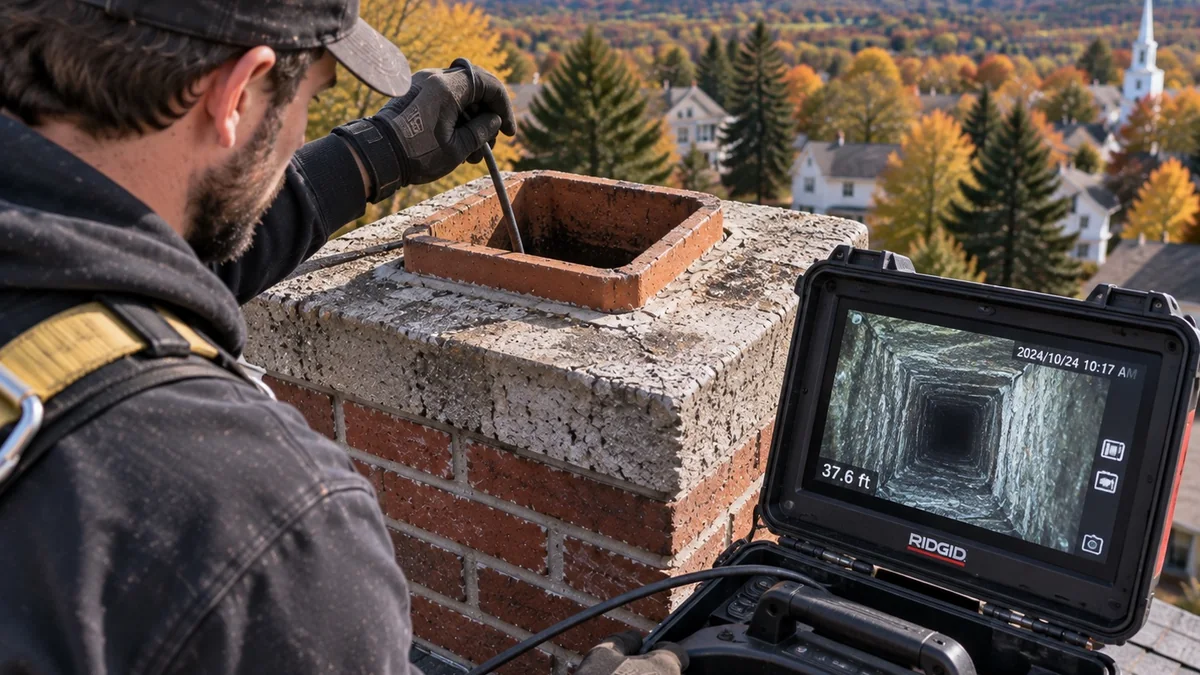
Everything in Level 1, plus accessible areas of attic, crawl space and roof, and video scanning of the flue interior. Required when a property changes hands, when the fuel or appliance changes, and after an event that could have damaged the chimney — a chimney fire, severe weather, an earthquake. No demolition is involved.
Level 3
Level 2 plus opening up concealed areas — removing masonry or building components — when a serious hazard is suspected and can't be evaluated otherwise. Uncommon, and never a starting point.
A visit, step by step
- Questions first. What's the appliance, how is it used, what's changed, and what prompted the call.
- Protection. Drop cloths and hearth covering before anything else.
- Firebox and damper. Firebrick condition, mortar joints, damper operation and seal, clearances to combustible trim and mantel.
- Smoke chamber. Whether it's parged smooth or left as rough corbelled brick with voids.
- Flue scan. Camera run of the full length — tile condition, joints, blockages, creosote, offsets, and any breach.
- Roof level. Crown, cap, flue termination, height above the roofline, flashing and counter-flashing, and the condition of the top courses.
- Exterior. Mortar joints, spalling, efflorescence, movement, and the condition of the chase on prefabricated chimneys.
- Attic and accessible framing on a Level 2 — clearances and any evidence of heat or water.
- Findings. Photos, written summary, and a clear statement on whether the appliance is safe to use.
Why the flue has to be clean first
A camera can't see tile behind a quarter inch of creosote. When a flue is heavily loaded, sweeping comes first and the scan follows in the same visit. That's why cleaning and inspection are usually booked together.
What inspections most often find
- Cracked crowns — by a wide margin the most common defect
- Missing or damaged caps
- Unparged smoke chambers with open voids between corbelled courses
- Clay tile with open or missing mortar joints
- Oversized flues on stove and insert installations
- Combustible material too close to the firebox or the flue
- Flashing repaired with roofing tar instead of proper metal work
For home buyers and sellers
General home inspectors will look at a chimney, but most aren't equipped to evaluate a flue and their reports say so — usually with a line recommending evaluation by a qualified professional. That line stalls closings. A Level 2 report with camera stills replaces it with specifics: sound, or here's the defect and here's the cost. Either way the deal moves.
Ask for the documentation. An inspection you can't see the evidence for is a verbal opinion. Photos, camera stills and a written component-by-component summary are what make the findings reviewable — by you, by a buyer, or by a second contractor.
How to prepare
- Don't burn for at least 24 hours beforehand
- Clear a path to the fireplace and move fragile items off the mantel
- Have any prior reports or repair records handy
- Note the appliance make and model if it's a stove or insert
- Make sure roof access is reasonable, and mention it if it isn't
Quick answers
Which inspection level do I need?
Annual maintenance with no changes: Level 1. Buying or selling, changing appliance or fuel, or after a chimney fire or severe storm: Level 2. Level 3 only when a hidden hazard is suspected.
Does an inspection include cleaning?
They're separate services usually performed in the same visit. A flue with heavy buildup has to be swept before it can be properly inspected.
How long is an inspection report good for?
It describes the chimney on the day it was done. For a real estate transaction, the more recent the better — most parties want one from within the past few months.
Need someone to look at it? Chimney Sweep Warwick NY covers Warwick and the surrounding towns. Call (845) 685-9770 or send a service request.