
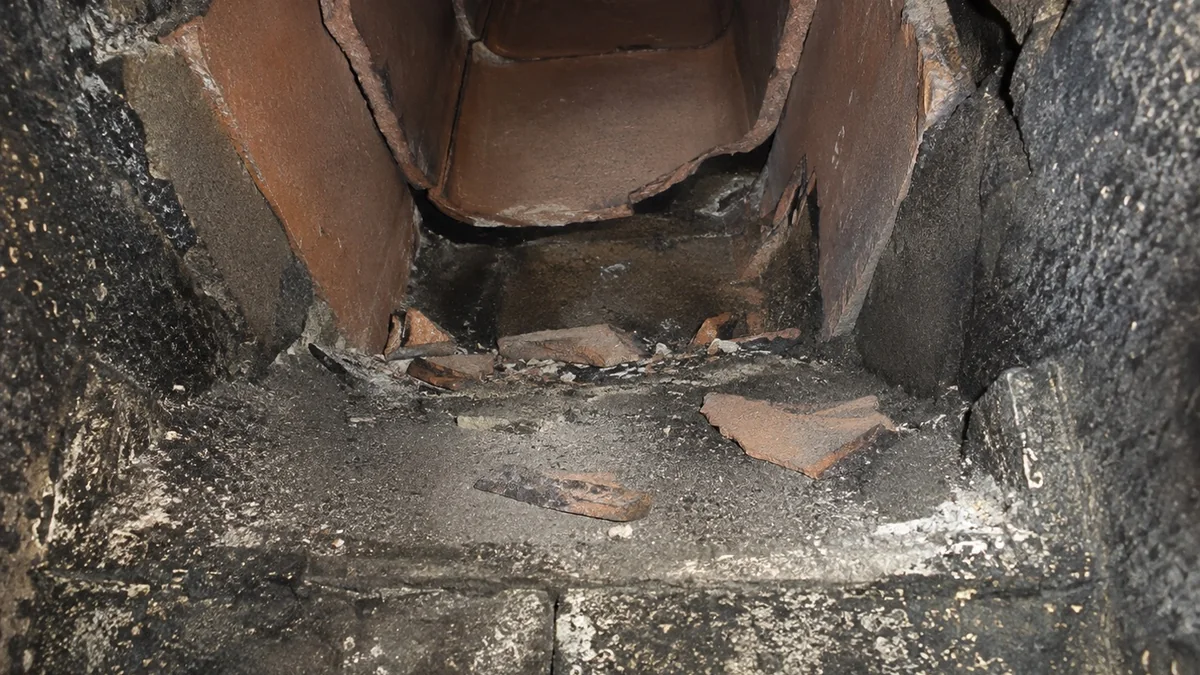
A liner keeps combustion gases inside the flue and heat away from the structure around it. When a camera scan turns up cracked tile, the practical question is whether the flue can be repaired or has to be relined. Usually the footage answers it.
What cracks a clay liner
- Chimney fire. Rapid heating cracks tile and can shift sections out of alignment. Even a small fire that burned itself out unnoticed leaves damage.
- Moisture and freeze-thaw. Water in the flue degrades the mortar joints between tiles and eventually the tile itself.
- Thermal shock. Clay handles steady heat well and sudden temperature swings poorly.
- Settlement. Structural movement opens joints and shears tiles.
- Age. Mortar joints from decades ago simply give out.
When repair is realistic
Isolated damage in an accessible location — a cracked tile in the top few feet, a single open joint — can sometimes be repaired by replacing that tile from above or by a joint-sealing system applied inside the flue. Two conditions have to hold: the damage is genuinely limited, and the rest of the flue is sound on camera.
When relining is the honest answer
- Cracks or open joints appear at multiple points along the flue
- Tiles have shifted, leaving gaps you can see through on camera
- Tile fragments are collecting on the smoke shelf
- There's been a chimney fire
- The chimney is unlined
- You're adding an insert or stove that needs a different flue diameter
- You're switching fuels
In those cases a stainless liner sized to the appliance, insulated, and run the full length is the repair. See chimney liner installation for how the work is done.
Cost, honestly
Repairing a tile or two is a modest job. Relining is a bigger one — the price depends on flue length, diameter, offsets and whether tile has to be removed to fit the liner. What tips the math is that a partial repair on a flue with widespread damage tends to get done twice. If the camera shows problems at several elevations, the cheaper-looking option is rarely cheaper.
Why a cracked liner matters
Two reasons, both serious. Combustion gases — carbon monoxide included — can pass through a breach into the structure or into living space. And heat that should stay in the flue reaches framing that was never meant to see it. A flue with a breach is not a maintenance item to schedule for spring; it's a reason to stop using the appliance until it's addressed.
Ask to see the footage. Any relining recommendation should come with camera stills showing where the damage is and how extensive it is. If nobody can show you the defect, you're being asked to buy a liner on trust.
Insurance after a chimney fire
Chimney fire damage is frequently covered, and relining is often part of the claim. What makes that process straightforward is documentation from a Level 2 inspection — dated camera stills showing cracked or shifted tile, plus the written findings.
Making the new liner last
- Burn seasoned wood, always
- Sweep annually — most liner warranties require it
- Keep a cap on the flue so the liner isn't taking rain
- Use the fuel the liner alloy was rated for
- Have the installation documented, including diameter and insulation
Quick answers
Can a cracked clay liner be patched from inside?
Joint-sealing systems exist and work in limited situations. They aren't a substitute for relining when damage is spread through the flue.
How do I know the liner is actually cracked?
A camera scan shows it. Ask for the stills — the defect should be visible, located and explained.
Is an unlined chimney safe to use?
It shouldn't be used for a modern appliance. Unlined flues let heat and combustion gases reach the surrounding masonry and framing directly.
Need someone to look at it? Chimney Sweep Warwick NY covers Warwick and the surrounding towns. Call (845) 685-9770 or send a service request.