Chimney Leak Repair
Finding the actual entry point — crown, flashing, brick face or cap — and sealing it.
See chimney leak repairThe cheapest protection on the chimney
Stainless, copper, multi-flue and top-sealing caps, measured to your flue and fastened so the wind keeps them there.
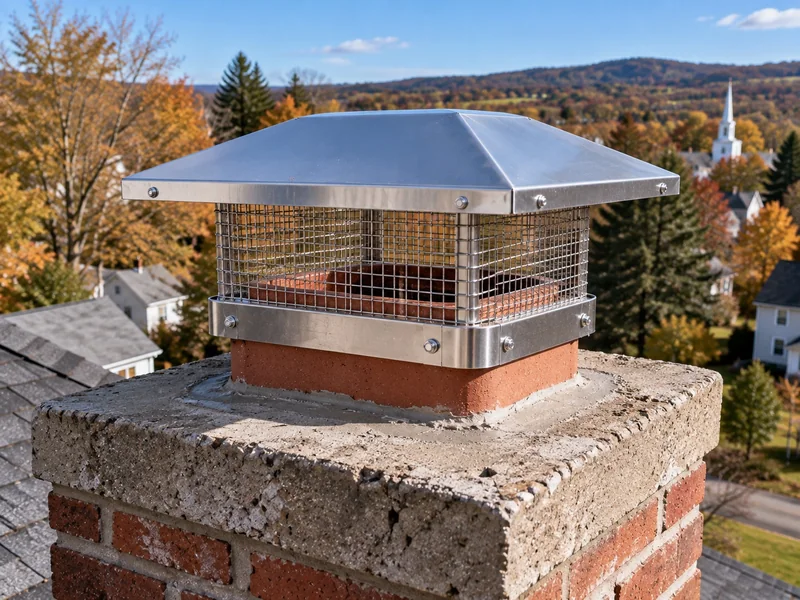
A chimney cap is the least expensive part of the system and prevents some of the most expensive damage. It sits over the flue opening and keeps rain, snow, animals and debris out while letting exhaust through — and on a wood-burning chimney, the screen catches embers before they land on the roof.
Mount directly to a single clay tile. Stainless or copper, with mesh screen and a lid. The straightforward choice for one flue.
One larger cap covering several flues and the crown beneath them. They protect the crown itself, which is often the real benefit — a crown kept dry stops cracking.
A cap with a gasketed door that closes at the top of the flue, operated by a cable from the firebox. Worth considering when the throat damper has failed: it replaces the damper, caps the chimney and cuts the air loss that an old throat damper leaks all year.
Wind-directional and specialty caps can help where a chimney sits below a roofline or near a hill and suffers persistent downdraft. They're a fix for a specific problem, not a general upgrade.
Galvanized caps are cheap and rust out in a few winters, usually staining the brick as they go. Stainless is the standard for a permanent installation. Copper costs more and belongs on houses where the look justifies it — it weathers to a patina and lasts decades. We fit stainless unless you want copper.
A cap has to fit the flue tile properly and be fastened so wind can't take it. Loose-fitting caps rattle, shift and end up in the yard. We measure the tile, fit the cap to that dimension, and secure it — then check that the screen mesh is appropriate for the appliance, since some gas appliances and high-moisture exhaust can ice or clog fine mesh.
Already have animals in the flue? Capping a chimney with a nest — or a live animal — inside makes things worse. We clear the flue first, then cap it. Chimney swifts are federally protected while nesting, and if they're present the work has to wait until they've fledged.
A cap protects the flue opening; the crown protects the masonry around it. Installing a cap on a cracked crown leaves half the problem in place — water keeps entering through the crown cracks, freezes, and widens them. When we quote a cap on a chimney with a failing crown, the crown work is quoted alongside it so you can see both. More on that in chimney repair and leak repair.
Caps need an occasional look. Screens clog with creosote and soot on heavily used wood chimneys, which restricts draft. Fasteners loosen. Lids dent under falling limbs. We check the cap at every sweep as part of the normal visit.
From the ground you can usually see whether there's a lid over the flue tiles. If you're not sure, we check the top at every sweep and can send you a photo of what's up there.
It stops direct rainfall into the flue. If water is still appearing, the entry point is elsewhere — usually the crown, the flashing, or the brick face absorbing wind-driven rain.
A properly sized cap shouldn't. An undersized cap or a clogged screen can restrict flow enough to affect draft, which is why screen condition gets checked at each sweep.
A single-flue stainless cap is usually under an hour once we're on the roof. Multi-flue caps are fabricated to the crown dimensions, so they take a measurement visit and then an installation visit.
Yes. Water and animals are a problem regardless of fuel, and moisture in gas exhaust is hard on liners that are also taking on rain.
Finding the actual entry point — crown, flashing, brick face or cap — and sealing it.
See chimney leak repairCrown rebuilds, damper work, firebox repairs and the structural fixes in between.
See chimney repairWe are based in Warwick and also sweep chimneys in these nearby communities.
Call (845) 685-9770 or send a request with your address and what the chimney is doing.