A chimney is the only part of a house with an opening straight through the roof, surrounded on all sides by weather, with masonry that absorbs water by nature. When water shows up inside, the question isn't whether the chimney is involved — it's which part.
Five ways water gets in
Straight down an open flue
No cap means rain falls directly into the flue, lands on the smoke shelf and soaks the masonry from the inside. Symptoms: a damp or sooty smell during rain, water in the firebox, a rusting damper. The fix is a cap, and it's the cheapest repair on this list.
Through a cracked crown
The crown should be a sloped concrete slab overhanging the brick with a gap around the flue tile so the two can expand independently. Many are a flat smear of mortar with no overhang and no expansion joint, and those crack within a few years. Water enters the cracks, freezes, widens them, and starts working on the masonry below.
Past failed flashing
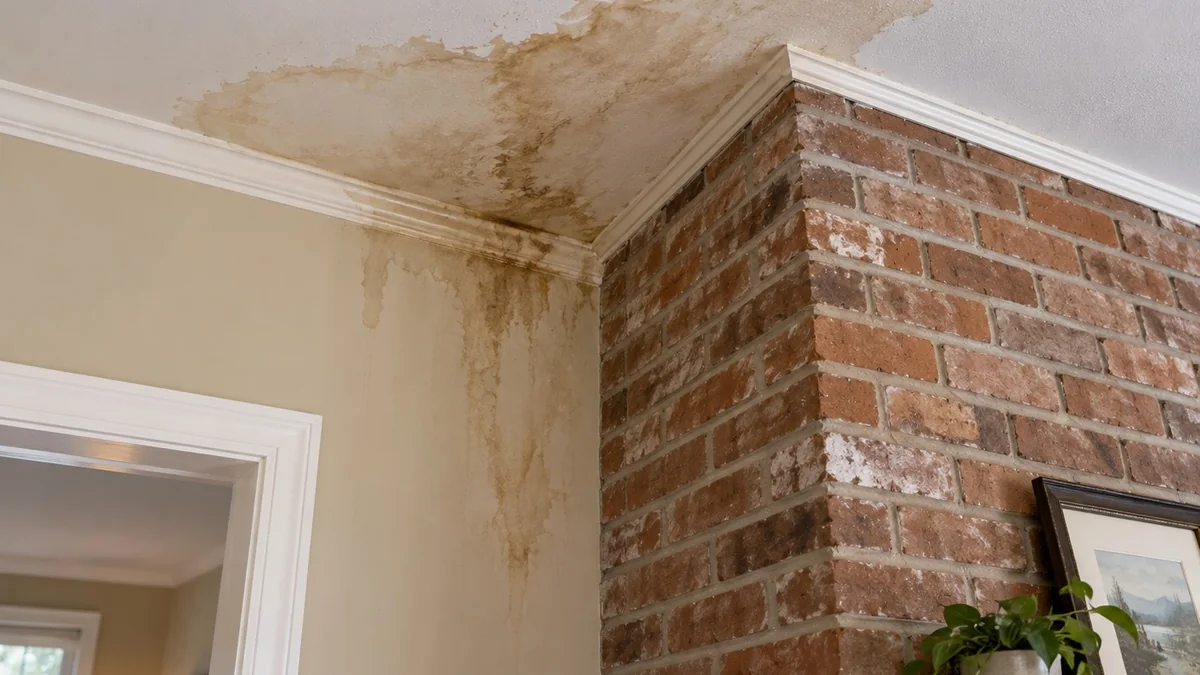
Where the chimney passes through the roof, step flashing woven into the shingles and counter-flashing set into the mortar joints keep water out. When either fails — or when someone "fixed" it with roofing tar — water runs down the framing and shows up as a ceiling stain near the chimney chase. This is the most common source of stains that appear a few feet away from the fireplace itself.
Absorbed through the brick
Brick and mortar are porous. Driving rain against a face with open joints can saturate the stack. Symptoms are subtle: efflorescence outside, damp interior walls after storms, no visible drip.
Condensing inside the flue
Not rain at all. An oversized or uninsulated flue lets exhaust cool and condense on the liner — and with gas appliances, that condensate is acidic and eats liners and mortar. The tell is moisture appearing while the appliance runs rather than during wet weather.
Reading the pattern
| What you notice | Most likely source |
|---|---|
| Water in the firebox during any rain | Open flue, or a crack directly above |
| Stain on the ceiling near the chimney after heavy rain | Flashing, or crown cracks |
| Damp interior wall only after wind-driven storms | Absorption through the brick face |
| White chalky deposits outside, no visible drip | Water moving through the masonry |
| Moisture while the appliance is running, dry weather | Condensation — flue sizing or insulation |
Why sealing the outside usually fails
The instinct is to coat the chimney with a waterproofer. If the actual entry is the crown, the flashing or the flue, the coating changes nothing. Worse, film-forming sealers trap moisture that's already inside the masonry, and the next freeze does more damage than before. Breathable, vapor-permeable repellents applied after the real repair are useful. Applied instead of the repair, they're a waste.
What a leak costs if you leave it
- Rusted dampers and metal components
- Mortar deterioration between flue tiles, which compromises the liner
- Rotted framing and sheathing in a chase
- Stained and failing plaster or drywall
- Accelerated freeze-thaw damage to the masonry every winter it continues
How the source gets found
Inside first — where the staining is and when it appears. Then the attic where accessible, following the water back up. Then roof level: crown, cap, flashing, top courses. Then a camera scan of the flue. If that doesn't settle it, water testing one component at a time until the entry shows itself. That sequence is the whole of chimney leak repair — the repair is the easy part once you know what you're repairing.
Quick answers
Is a chimney leak covered by homeowners insurance?
Sudden damage from a storm is often covered; gradual deterioration and deferred maintenance generally aren't. Document the damage and the weather event, and check your own policy language.
Can I use the fireplace if the chimney is leaking?
Usually yes in the short term, unless the inspection finds liner damage or blockage. The bigger risk is what the water is doing to the structure between now and the repair.
Does a chimney cap stop all leaks?
It stops rain falling into the flue. If the crown, flashing or brick is the source, a cap won't change anything — which is why diagnosis comes before parts.
Need someone to look at it? Chimney Sweep Warwick NY covers Warwick and the surrounding towns. Call (845) 685-9770 or send a service request.